
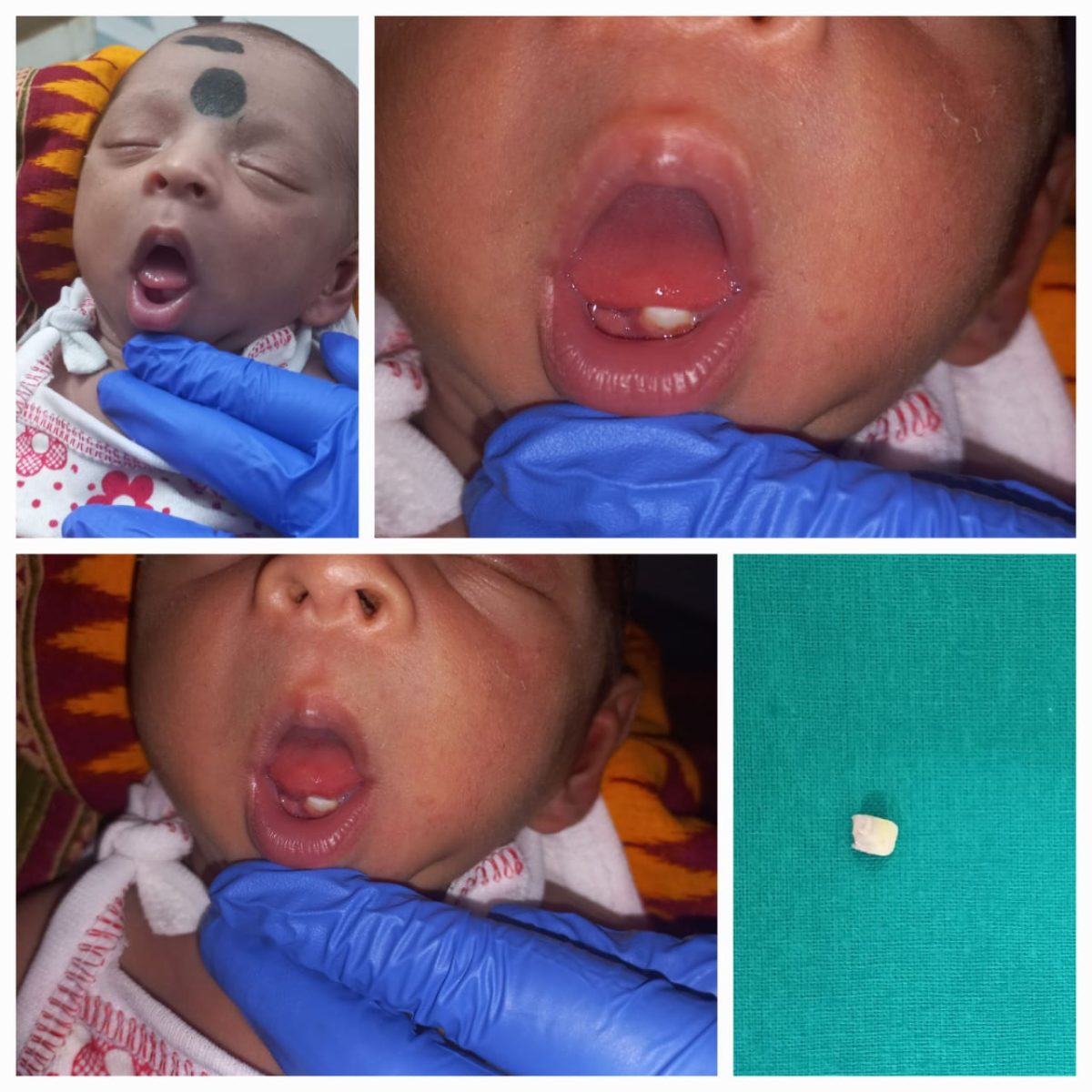
Welcome to the Pediadent Dental Clinic blog! We’re here to talk about a topic that might sound a little surprising: teeth that are present at birth or erupt very shortly after. It’s a rare occurrence, but it can be a source of concern for new parents.
What Are Natal and Neonatal Teeth?
Natal teeth are teeth that are present in the mouth at the time of birth. They are the most common of these two conditions. Neonatal teeth are teeth that erupt within the first 30 days of life. While they may look different, both are essentially the same condition, just with a slightly different timing. Both are relatively uncommon, with natal teeth being more frequent than neonatal teeth. They most often appear in the position of the lower central incisors (the two front bottom teeth) .
Why Do They Occur?
The exact cause is not always clear, but they are often considered a normal developmental variation. In some cases, they can be associated with certain syndromes, but this is rare. The teeth are usually superficial and are not as well-formed as regular baby teeth. They can be part of the primary (baby) dentition, meaning they are just an early version of the child’s first teeth. Sometimes, they can be supernumerary, which means they are extra teeth.
What Are the Risks and When Should You Be Concerned?
While they may seem alarming, natal and neonatal teeth don’t always require treatment. However, there are a few potential issues to consider:
- Risk of Aspiration: There is a small risk that the tooth could become loose and be accidentally inhaled by the baby.
- Irritation and Ulceration: The sharp edge of the tooth can cause an ulcer on the underside of the baby’s tongue (Riga-Fede disease).
- Difficulty with Breastfeeding: The tooth can cause discomfort to the mother during nursing.
Dr. Sonu Acharya, our expert in pediatric and preventive dentistry at Pediadent, emphasizes the importance of a professional evaluation. “While many of these teeth don’t pose a risk, it’s crucial to have a pediatric dentist examine your baby to determine if the tooth is stable and whether it needs to be removed,” says Dr. Acharya, a fellow of the International Association of Paediatric Dentistry (FIAPD).
Treatment Options
The decision to treat a natal or neonatal tooth depends on the issues it’s causing. If the tooth is stable, not bothering the baby, and not causing problems with feeding, it may be left alone. If the tooth is causing a problem, the pediatric dentist may recommend its removal. This is a simple procedure that can often be done in the office.
At Pediadent, we are dedicated to providing the best care for your child’s smile from the very beginning. If you’ve noticed a tooth in your newborn, don’t hesitate to schedule an appointment with Dr. Acharya for a compassionate and expert consultation